Moving without the cardboard ritual.
Clean, reusable plastic crates arrive ready to pack, move on dollies and are collected when the job is done.
The public website, booking experience and operational tools turn that promise into a working service—from quote to payment, delivery, pickup and reporting.

The customer is not looking for a box. They are trying to make a move feel manageable.
A move already contains dozens of decisions. Cardboard adds estimating, sourcing, assembly, tape and disposal. Armadillo Crates replaces that chain with one clear rental: choose a bundle, select dates, pack, move and return.
The website has to explain a circular service, not a one-time purchase.
Every order connects reusable inventory, two addresses, delivery and pickup. Three memorable moments organize the promise: we deliver, you move, we pick up.

Make the alternative visible before asking for a reservation.
The site contrasts reusable, stackable and water-resistant crates with cardboard rituals and supports the promise with dimensions, capacity, dollies, zones and rental duration.
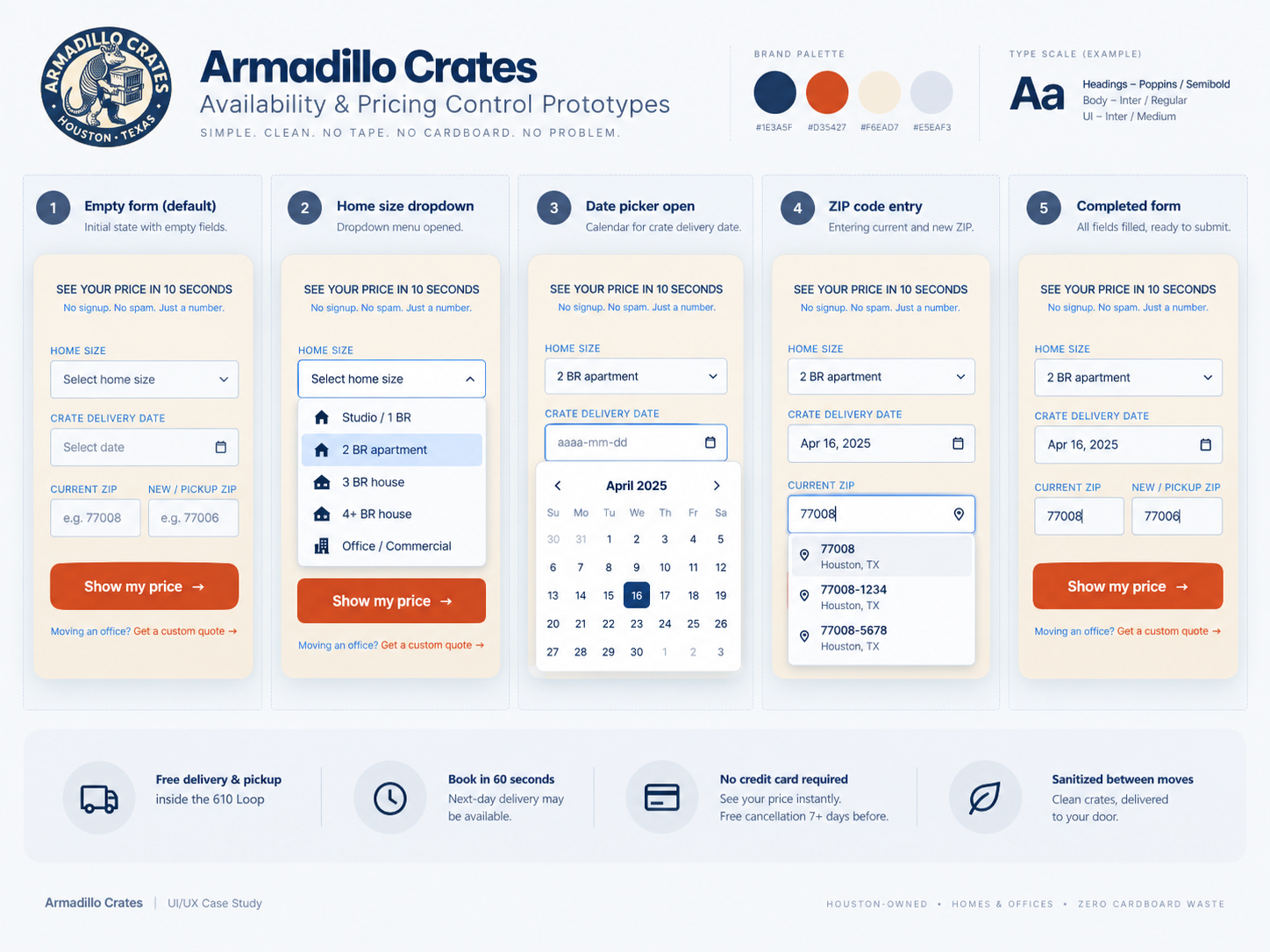
Start with move size. Reveal complexity only when it becomes relevant.
Customers think in studios, apartments and homes—not inventory SKUs. Four bundles turn familiar move sizes into one decision, followed by dates, locations, add-ons and details.
Let customers test the service before asking for commitment.
Move size, ZIP codes and timing create a useful first quote. Those choices carry into booking instead of making the customer start again.
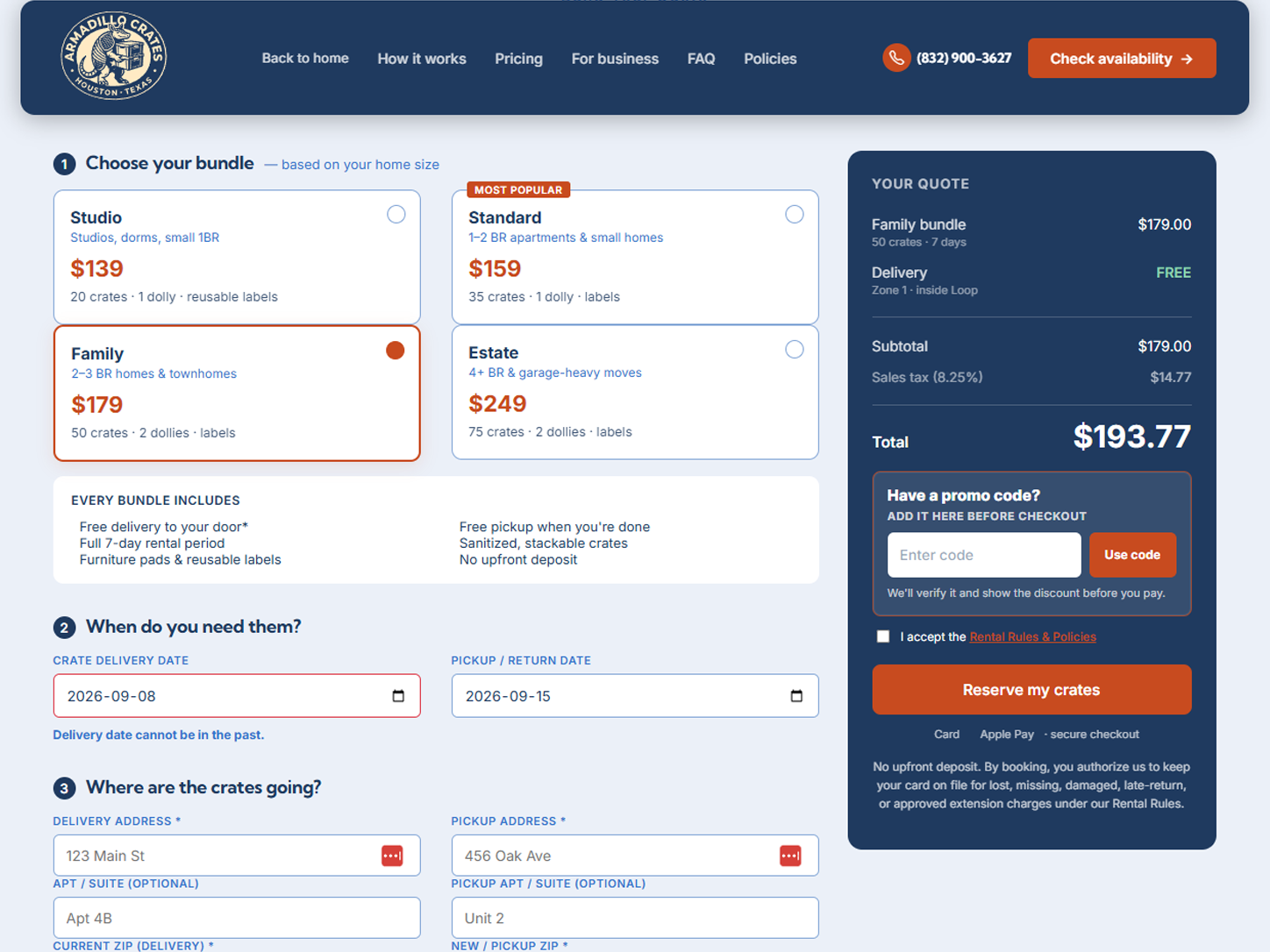
Package the move, not individual crates.
Studio, Standard, Family and Estate provide concrete recommendations with crate quantities, dollies, labels and a seven-day rental. The summary updates with every choice.
STUDIO
20CRATES / 7 DAYSSTANDARD
35CRATES / 7 DAYSFAMILY
50CRATES / 7 DAYSESTATE
75CRATES / 7 DAYSA rental date is both a customer choice and an operational constraint.
Delivery and pickup work as a relationship. Server validation rejects past, impossible or reversed dates and calculates additional rental weeks without timezone surprises.
Turn Houston geography into a price customers can understand.
Delivery and pickup ZIP codes determine eligibility and zone fees. Different locations use the higher fee, while out-of-area addresses stop with a clear explanation before payment.
Are both ZIP codes inside the service area?
The interface responds immediately. The server validates again before creating payment.
BOOKING STOPPED
Checkout stops and explains availability before payment.
HIGHEST ZONE FEE APPLIED
Every choice should have a visible consequence.
Bundle, duration, zone, extras, promotion, tax and total remain visible. The server rebuilds the order from the catalog, validates discounts and calculates Texas sales tax.
STANDARD / 35 CRATES
DELIVERY / HOUSTON ZONE 02RENTAL / 7 DAYSKeep payment inside the experience without weakening trust.
Stripe Payment Element handles payment data inside the Armadillo interface. The webhook—not the browser redirect—is the authority that marks an order paid.
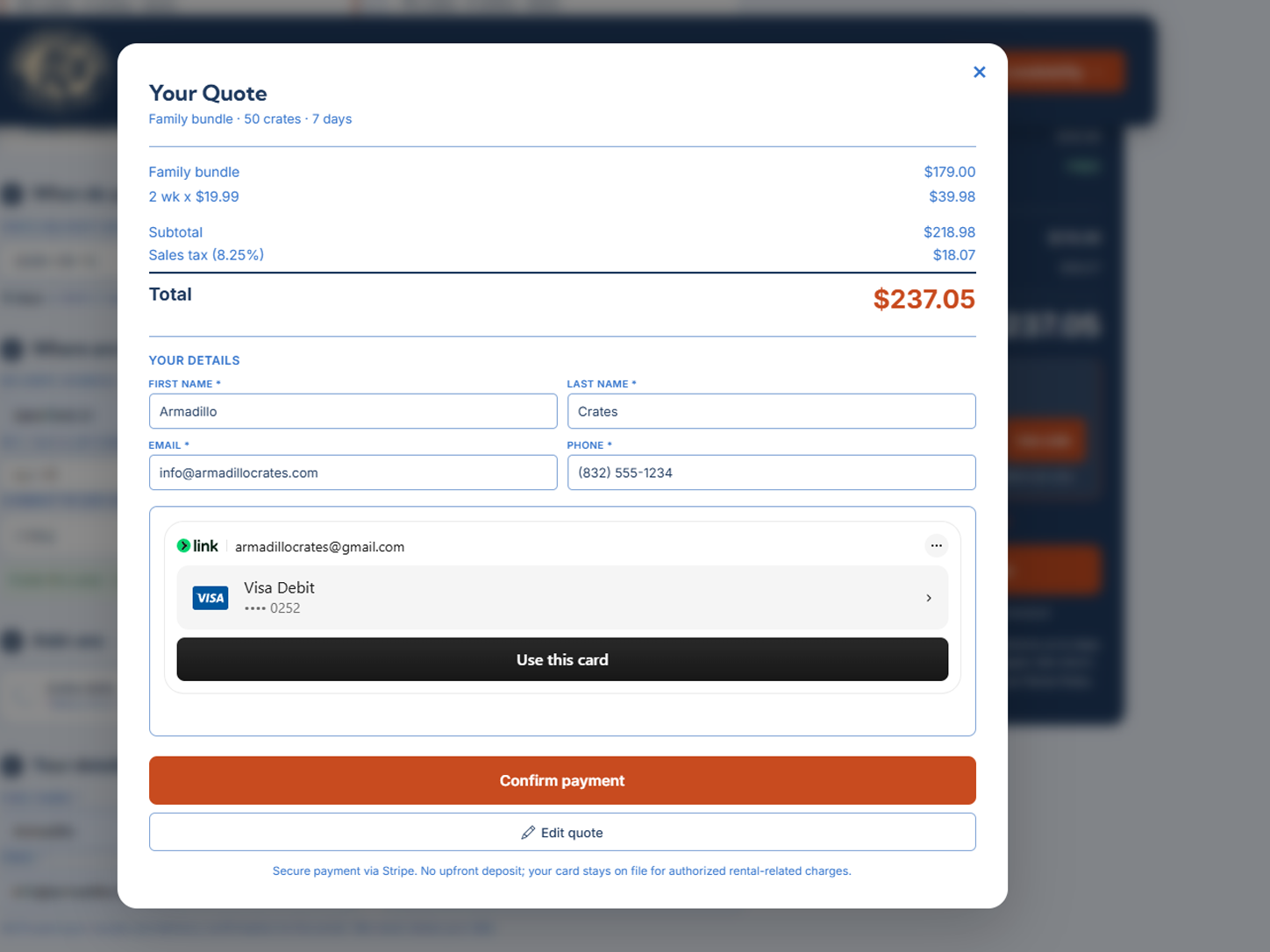
Payment is a moment. Confirmation is a system state.
The final state joins receipt and service details: order number, bundle, dates, addresses, pricing and next steps. Idempotent webhooks prevent duplicate confirmations.
Make the most common exception feel like part of the original service.
An eligible customer can use a secure link to add one or two weeks, review the pickup date and pay. The order changes only after payment is confirmed.
The service needs a shared operational memory.
Staff can search orders, inspect complete records and update operational fields while payment totals and Stripe identifiers remain protected.
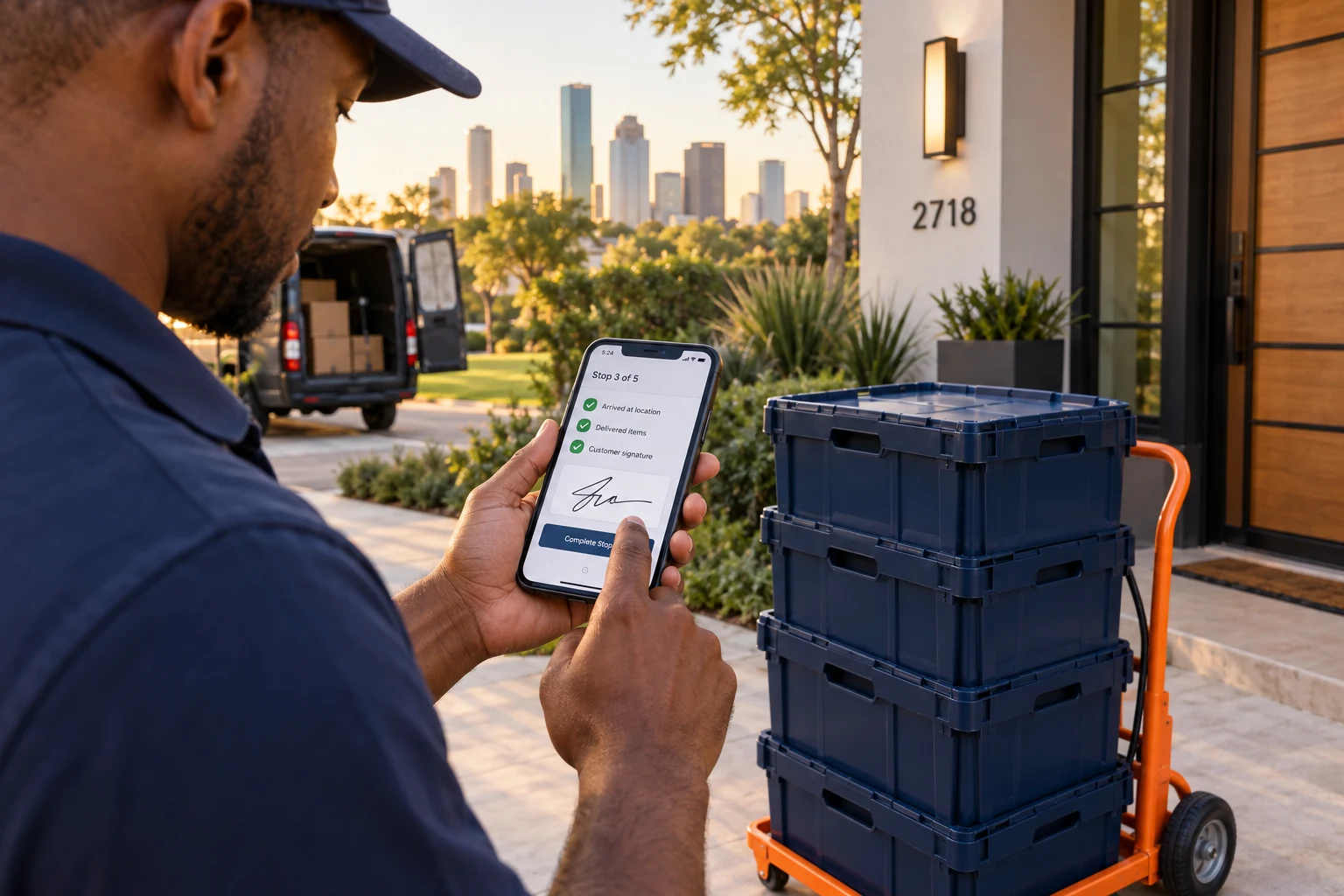
Give the field team the record they need, not the entire back office.
The driver view isolates open stops, item counts and signature capture. Signed handoffs connect physical inventory to the digital order history.
An operational email should answer the next question.
Customer and operations emails serve different needs. Both can be rebuilt from current order data, resent by staff and logged as auditable service actions.

Marketing flexibility should not create accounting ambiguity.
Coupons are scheduled, limited and counted only after successful payment. Monthly reports separate pre-tax amount, tax and total with Excel-ready export.
One language across marketing, booking and operations.
Navy establishes trust, orange focuses action and cream keeps the product warm. The operational interface becomes denser without abandoning shared hierarchy and status language.
Moving rarely happens from behind a desk.
Customers compare and confirm while coordinating a move; staff and drivers work equally mobile. Every workflow was designed for smaller screens, not compressed afterward.
Design the visible experience and the invisible rules together.
Astro and Cloudflare Pages Functions connect to D1, Stripe and Resend. Server pricing, webhook authority, event idempotency, roles and audit records keep the service accountable.
The strongest product decisions came from operating the service.
Real launch questions became product rules: mixed zones, extensions, email resends, test-order reporting and the exact information a driver needs at the door.
Designing the reservation is only part of designing the rental.
Convenience has to survive the whole journey. Armadillo Crates explains a new behavior, helps customers select confidently, protects pricing and payment, guides fulfillment and creates a durable operational record.